Published 2026-07-17Updated 2026-07-1710 min read
The audit report told the society what is wrong, why, how urgently and at what estimated cost. What follows is a project — often the largest the society will ever run — and projects fail in predictable places: scope defined vaguely, contractors selected on price alone, execution unsupervised, completion undocumented. The sequence in this chapter exists to close each of those failure modes in order.
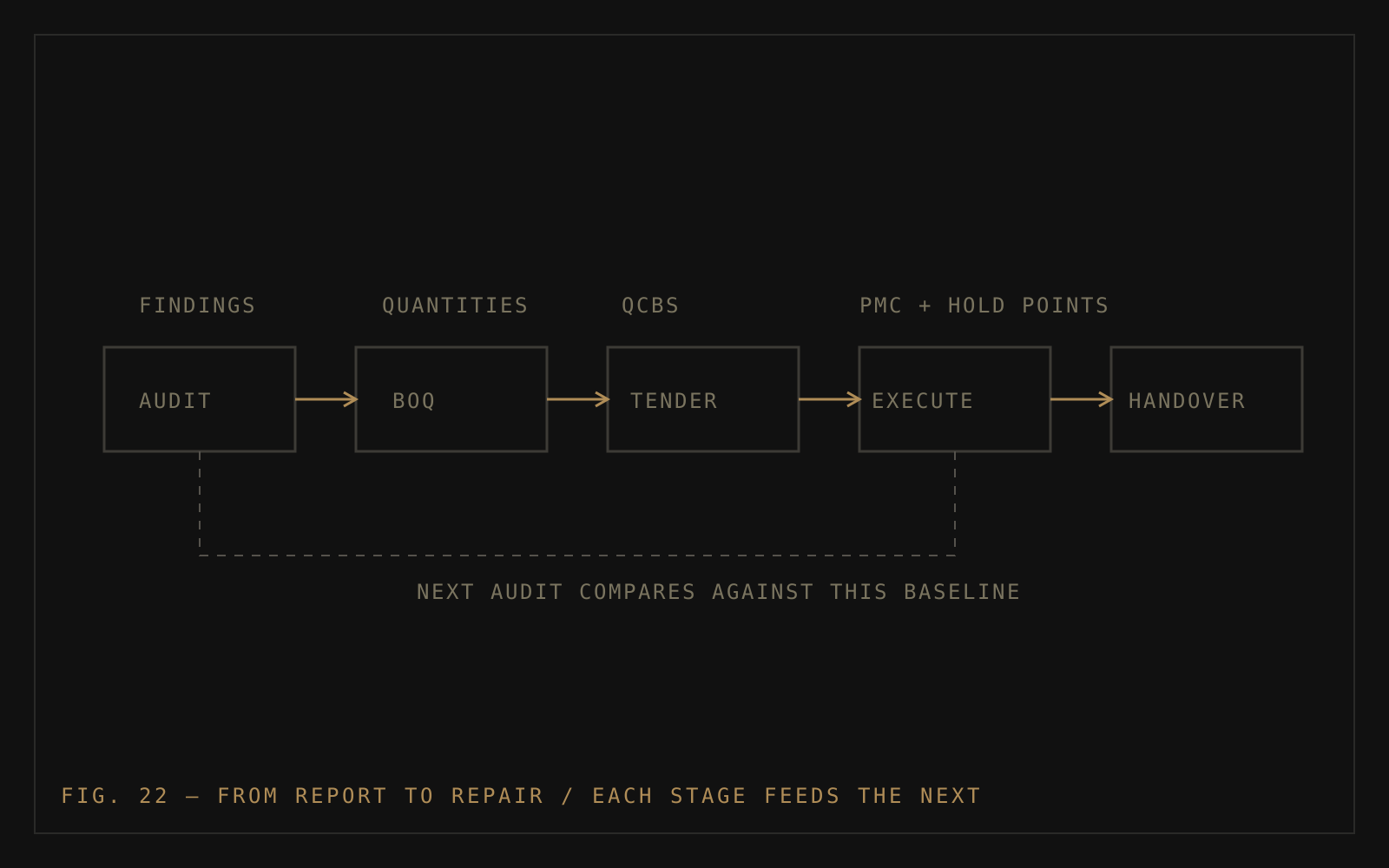
Stage one: findings become a bill of quantities
Definition — Bill of quantities (BOQ)
A bill of quantities is an itemised schedule of every repair work item — its specification, unit of measurement and estimated quantity — prepared so that all bidders price identical, well-defined work. The BOQ is the bridge between the audit's engineering findings and a commercial contract.
The audit's prioritised recommendations are converted into measurable line items: square metres of spall repair to a stated system, running metres of crack injection, numbers of members to be jacketed, terrace areas to be waterproofed to a named specification. Precision here is what makes everything downstream honest — vague items ('structural repairs as directed') invite low headline bids that grow through variations, while measured items purchased against specifications can be compared, contracted and verified. This is also where phasing is locked: urgent tiers separated from deferrable ones so funding decisions map cleanly onto engineering priorities.
Stage two: the tender
With a real BOQ, competitive bidding becomes meaningful. Two decisions matter more than any other. First, prequalification: before price is even opened, bidders should demonstrate repair-specific experience, technical staff, and financial capacity — structural repair is specialist work, and a building is a poor place to train a general contractor. Second, the evaluation method: selecting purely on lowest price (L1) optimises for the bidder most willing to cut what the society cannot see, which in repair work means preparation, materials and cover. Quality-and-cost-based selection (QCBS) — scoring methodology, experience and price on predefined weights — selects for value instead. The mathematics of these methods, and how digital tendering keeps the process transparent, is covered by our tender consultancy practice; the principle a committee needs is simpler: decide the evaluation rules before opening any bid, and put them in writing.
The costliest sentence in repair projects is 'the lowest bid saves us money.' The saving is visible on day one; the cost arrives over the following years, in repairs that fail early because the margin came out of preparation and materials.
Stage three: supervised execution
A signed contract does not execute itself. Repair quality is decided at moments no committee can assess — is the corroded bar fully exposed and cleaned before reinstatement? Is the substrate prepared? Is the repair mortar the specified one, mixed correctly, cured properly? Independent supervision under a project management consultancy exists to stand at those moments with authority to act. The core mechanism is the hold point: defined stages — reinforcement exposure, surface preparation, before covering up — where work must pause for engineering approval before proceeding. Alongside run measured-quantity verification (joint measurement of actual executed quantities against the BOQ before bills are certified), material checks, and progress and budget monitoring the committee can actually read — in our practice through AI-assisted dashboards that keep every certified bill traceable to verified work.
Stage four: handover and the closed loop
The project ends properly only when it is documented: as-executed records of what was done where, with which materials; test and inspection records from hold points; warranties and guarantees with their conditions; and a maintenance schedule stating what the society must now do (and avoid) to keep those warranties alive. This file is not bureaucracy — it is the baseline the next audit measures against. A society that can put repair records beside consecutive audit reports converts its maintenance history into engineering evidence: which repairs held, which zones re-deteriorated, what the building's true rate of ageing is. That is the closed loop in Fig. 22 — and it is what turns repair spending from recurring crisis into managed asset care.
Where societies lose the plot
- Skipping from report to a known contractor without a BOQ — scope stays vague, price stays unanchored
- Letting a bidder 'improve' the specification — the tender must compare offers against one specification, not several
- Appointing the auditor's or contractor's own staff as supervisor — supervision must answer to the society, no one else
- Paying against invoices instead of jointly measured quantities
- Closing the project without documentation because everyone is exhausted — the last ten percent of paperwork protects the whole spend
None of these stages is exotic; each is simply the audit's precision carried forward one more step. The society that holds the chain — findings to BOQ to predefined evaluation to hold-point supervision to documented handover — gets the repair its audit actually specified. Break any link, and the gap is where the money leaks.