Published 2026-07-14Updated 2026-07-149 min read
Definition — Structural audit
A structural audit is a systematic engineering assessment of an existing building, carried out by a qualified structural engineer to evaluate its structural condition, identify active deterioration mechanisms, and recommend appropriate repair measures with specifications and budget estimates.
Read that definition once more, because every word is doing work. Systematic — the whole building is examined to a method, not a walk-around of whatever is convenient. Engineering assessment — observations are interpreted, not merely photographed. Deterioration mechanisms — the audit names causes, not symptoms. And recommendations with specifications and budgets — the output is a plan a society can act on, not a scrapbook of defects.
If you have read the Building Structure chapters of this library, you already know the two ideas an audit is built on: the load path that carries the building, and the slow chemical attacks — carbonation, chloride ingress, corrosion — that work on it invisibly. An audit is the organised act of finding out where your building stands in both stories.
When does a building need one?
- Age triggers — municipal regulations and co-operative society bye-laws in Maharashtra mandate periodic audits for ageing buildings, with frequency depending on building age
- Visible distress — cracks along reinforcement lines, spalling, rust staining, persistent leakage or damp
- Before any major repair — the audit defines what the repair should actually fix, and what it will cost
- After unusual events — nearby excavation, flooding, fire, seismic activity or structural alteration
- Due diligence — redevelopment feasibility, conveyance, or a change in building use
The worst time to commission an audit is after the repair contractor has been chosen. The audit is what tells you what the repair should be — done in the right order, it is the society's strongest negotiating document.
What the engineer actually examines
The audit works through the load path from the previous chapters, member by member: columns — especially at ground and stilt level, where loads are highest and exposure is often worst; beams and slabs, for cracking patterns, deflection and corrosion signs; the building envelope — façades, terraces and external walls, where water enters; and the wet areas, tanks, shafts and plumbing zones that keep concrete saturated. Alongside the structure itself, the engineer reads its history: previous repairs, persistent complaint locations, and any earlier audit reports.
How the process runs
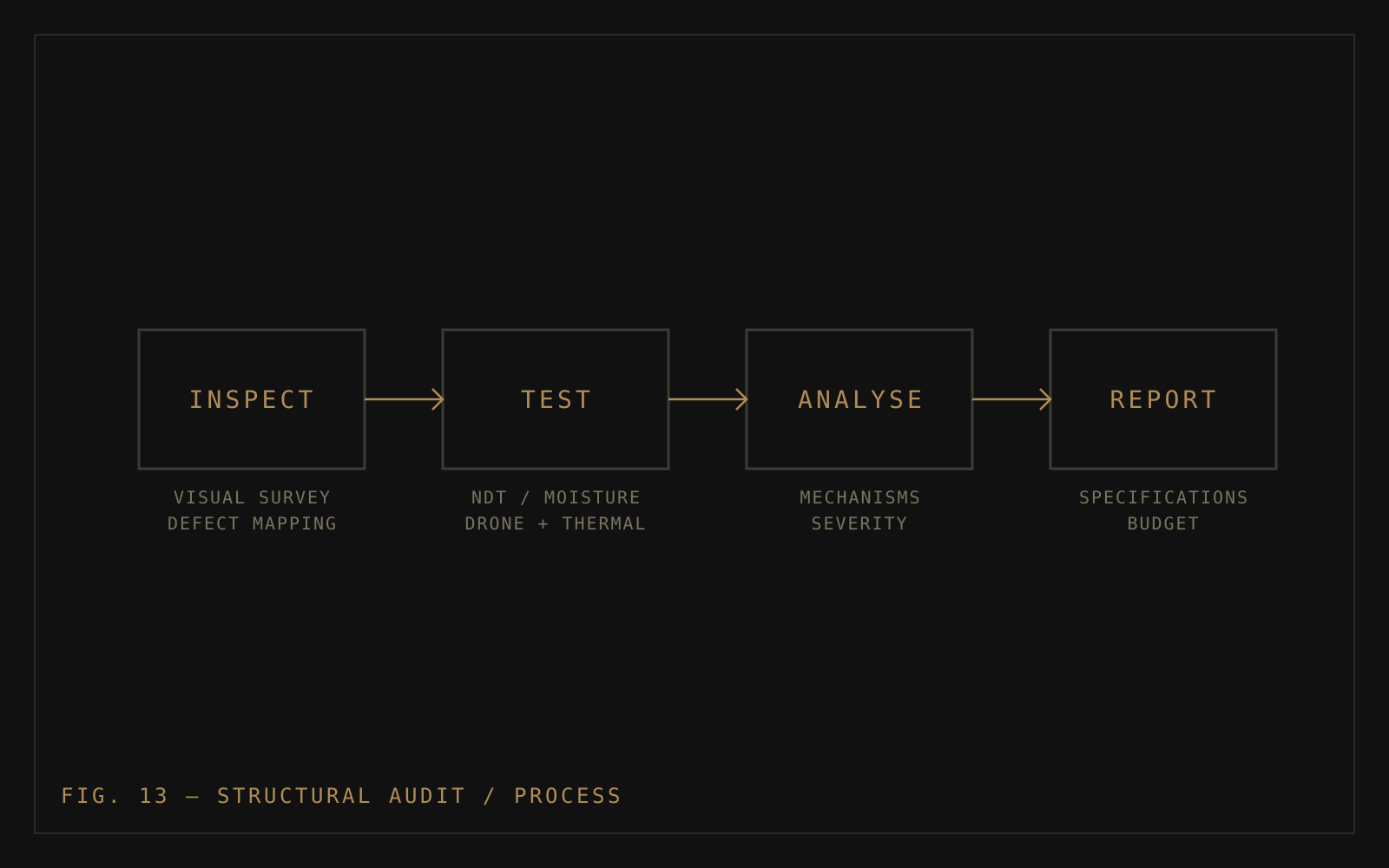
Inspect. The visual condition survey documents every observable defect — located, photographed, classified. In our practice this stage is extended by drone survey and photogrammetry, so upper-floor façades are documented at the same fidelity as the ground floor, and by full-building thermography, which reveals hidden moisture the eye cannot see.
Test. Visual findings raise questions only testing can answer: how deep has carbonation advanced? Is corrosion active inside that member? How sound is the concrete? Non-destructive tests — the subject of the next chapter — answer these without breaking the building open.
Analyse. Observations and test results are read together to name the mechanisms at work, their severity and their urgency. This is the step that separates an audit from an inspection — and it is pure engineering judgement.
Report. The findings become a document: defect maps, test interpretations, repair recommendations with priorities, specifications and a budget estimate. A society should be able to take this report straight into tendering — how to read it as a committee, and what happens after it, each have their own chapter.
What a proper report contains
- Scope, methodology and the standards followed
- Defect maps and photographic documentation, located on the building
- Test results with engineering interpretation — numbers alone are not findings
- The mechanisms identified, their severity and progression
- Repair recommendations with priorities and specifications
- A budget estimate for the recommended repairs
- The auditor's qualification and licence details
A useful test for committees: after reading the report, can you answer what is wrong, why, how urgent it is, what it will cost, and what to do first? If any of those is missing, the audit is incomplete — however thick the document.