Published 2026-07-17Updated 2026-07-179 min read
Regulatory specifics vary by state, municipality and time — requirements are amended, and court and administrative directions modify practice. This chapter explains the framework; before acting, a society should verify the current requirement with its municipal authority and the registrar's current model bye-laws. Treat any secondhand summary, including this one, as a starting point.
Definition — Mandatory structural audit
A mandatory structural audit is one required by law or bye-law rather than commissioned voluntarily — typically triggered by a building crossing a prescribed age, and required to be carried out by a qualified structural engineer, often one registered or empanelled with the municipal authority, with the report submitted or held available as prescribed.
The age-based framework
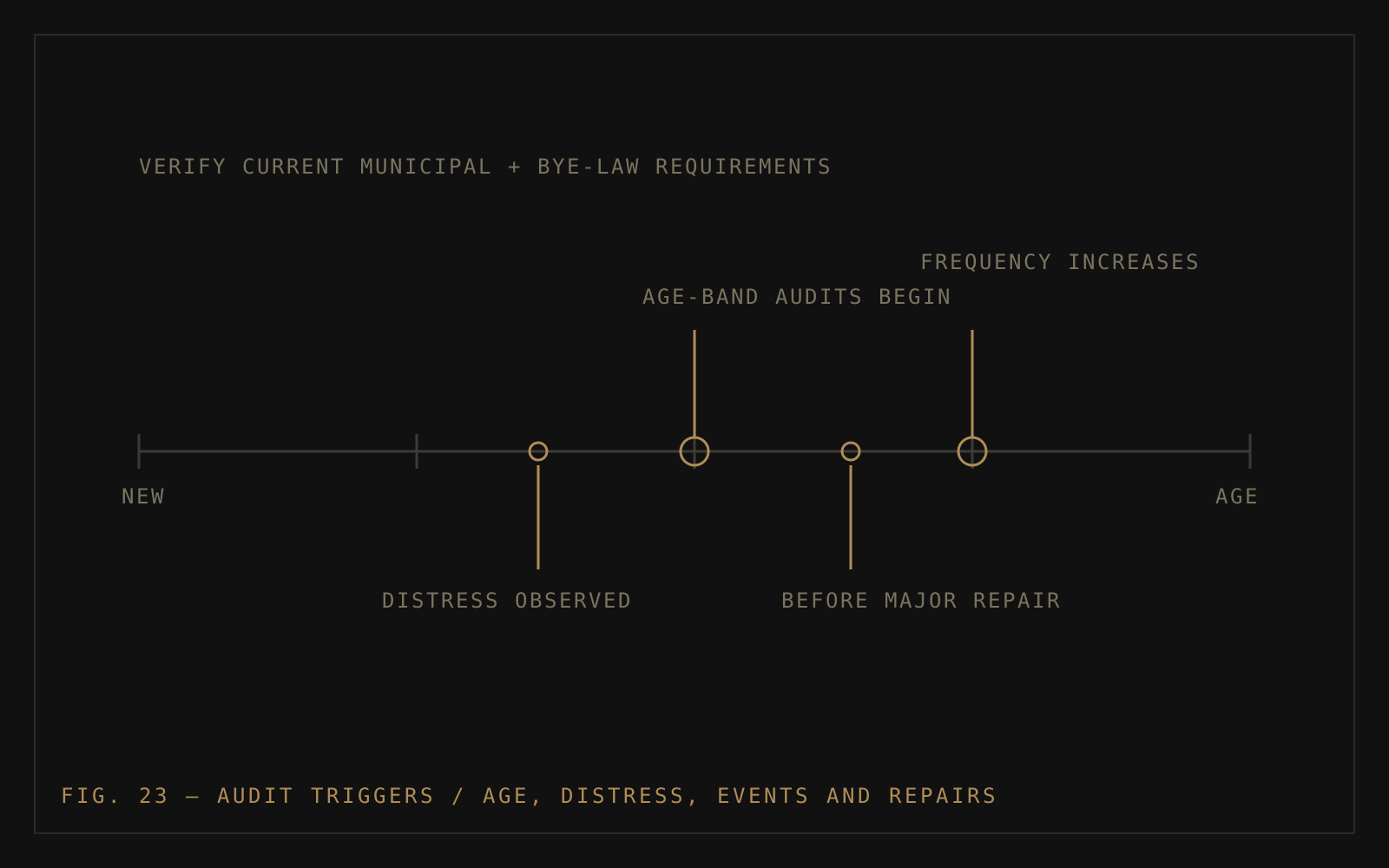
The common Indian pattern ties audit obligations to building age, on the logic of the lifespan chapter: deterioration mechanisms accelerate with time, so inspection frequency should rise with age. Maharashtra offers the most developed example. The model bye-laws for co-operative housing societies — bye-law 77 is the commonly cited reference — prescribe periodic structural audits once a building crosses roughly fifteen years of age, with the required frequency increasing (commonly cited as five-yearly, tightening to three-yearly beyond thirty years) as the building grows older. Mumbai's municipal framework similarly requires audits of ageing buildings under the Mumbai Municipal Corporation Act, with the trigger commonly cited at thirty years and periodic repetition thereafter. Other municipal corporations across Maharashtra and India have adopted comparable age-triggered requirements — the ages and intervals differ, the architecture is the same.
Beyond age: the event-based triggers
- Visible distress — significant cracking, spalling or deflection can trigger municipal notices requiring audit and repair, at any building age
- After events — fire, flood, earthquake, vehicle impact or nearby deep excavation are engineering triggers regardless of the statutory calendar
- Change of use or major alteration — added loads or modified structure invalidate the assumptions the building was living under
- Redevelopment and conveyance processes — condition assessment feeds feasibility and value decisions
- Insurance and lender requirements — increasingly common contractual triggers independent of municipal law
Who may conduct a mandatory audit
Mandatory audits must generally be conducted by a qualified structural engineer — and municipal frameworks typically require registration or empanelment with the authority concerned, so the auditor's licence number appears on the report. This is worth the committee's attention for a practical reason beyond compliance: the empanelment requirement is the system's minimum quality filter, not its maximum. A report that satisfies the letter of the requirement can still be engineering-thin — the difference between a compliance document and a useful audit is the difference described in how to read an audit report, and the selection criteria in the next chapter.
The committee's responsibility — and exposure
Under co-operative frameworks the society — acting through its managing committee — is responsible for maintaining the structure, commissioning required audits, and acting on their findings; municipal authorities can issue repair notices on the strength of audit findings or visible distress, and prolonged non-compliance carries escalating consequences for the society and, in serious neglect, for committee members personally. The uncomfortable scenario committees should understand is the paper trail one: an audit that identified urgent repairs, filed and not acted upon, is precisely the document that establishes the society knew. The obligation is not to possess a report; it is to maintain a safe building, with the report as evidence of diligence — which is why the report-to-repair sequence matters legally as well as financially.
The compliance perspective and the engineering perspective converge on the same practice: audit on a rhythm at least as frequent as the rules require, act on priorities, document the action. A society that treats the mandatory audit as the floor — the minimum inspection its building would deserve even if no law existed — satisfies the law automatically and, more to the point, actually knows the condition of the structure its members sleep in.