Published 2026-07-17Updated 2026-07-179 min read
Definition — Design life
Design life is the period a structure is designed to serve its purpose with anticipated maintenance but without major repair. Indian practice per IS 456 generally contemplates a design life in the region of fifty years for ordinary buildings — a planning assumption for design decisions, not an expiry date stamped on the structure.
The number matters less than what it does and does not promise. Design life assumes the building was built as designed — with the specified cover, compaction and curing — and maintained as assumed. Neither assumption is guaranteed. A building with generous cover, dense concrete and disciplined maintenance can serve well beyond its design life; a building with construction defects, coastal exposure and deferred repairs can be in serious distress at twenty-five. Both outcomes are visible across Indian cities today, often in the same street.
Why 'how long does concrete last' is the wrong question
Plain concrete is nearly geological — Roman marine concrete has survived two millennia. What limits an RCC building is not the concrete but the partnership described in the first chapter: steel doing the tension work, protected by concrete's alkalinity. The building's clock is the time the carbonation and chloride fronts take to cross the cover and set corrosion running — plus the time corrosion then takes to consume enough steel to matter. Every factor that lengthens or shortens building life works on one of those two intervals.
What shortens life — and what buys it back
| Factor | Effect on service life |
|---|---|
| Exposure — coastal chlorides, industrial atmospheres, heavy monsoon | Faster front advance; the same detailing ages faster in Mumbai's sea air than inland |
| Construction quality — cover, compaction, curing | The largest factor engineers can measure; defects put the clock decades ahead |
| Water management — waterproofing, drainage, plumbing | Deny water and every deterioration mechanism slows; leakage is the great accelerant |
| Maintenance rhythm — periodic audits, prompt small repairs | Catches deterioration while intervention is minor; each timely cycle resets the visible damage curve |
| Repair quality | Cause-treating repairs extend life; cosmetic repairs merely repaint the countdown |
| Load changes and alterations | Removed walls, added floors, cut members quietly spend structural reserve |
Notice what the table does not contain: age. Age is the axis, not a cause. Buildings do not deteriorate because years pass; they deteriorate because mechanisms operate through those years — at rates the factors above control.
The maintained curve and the neglected curve
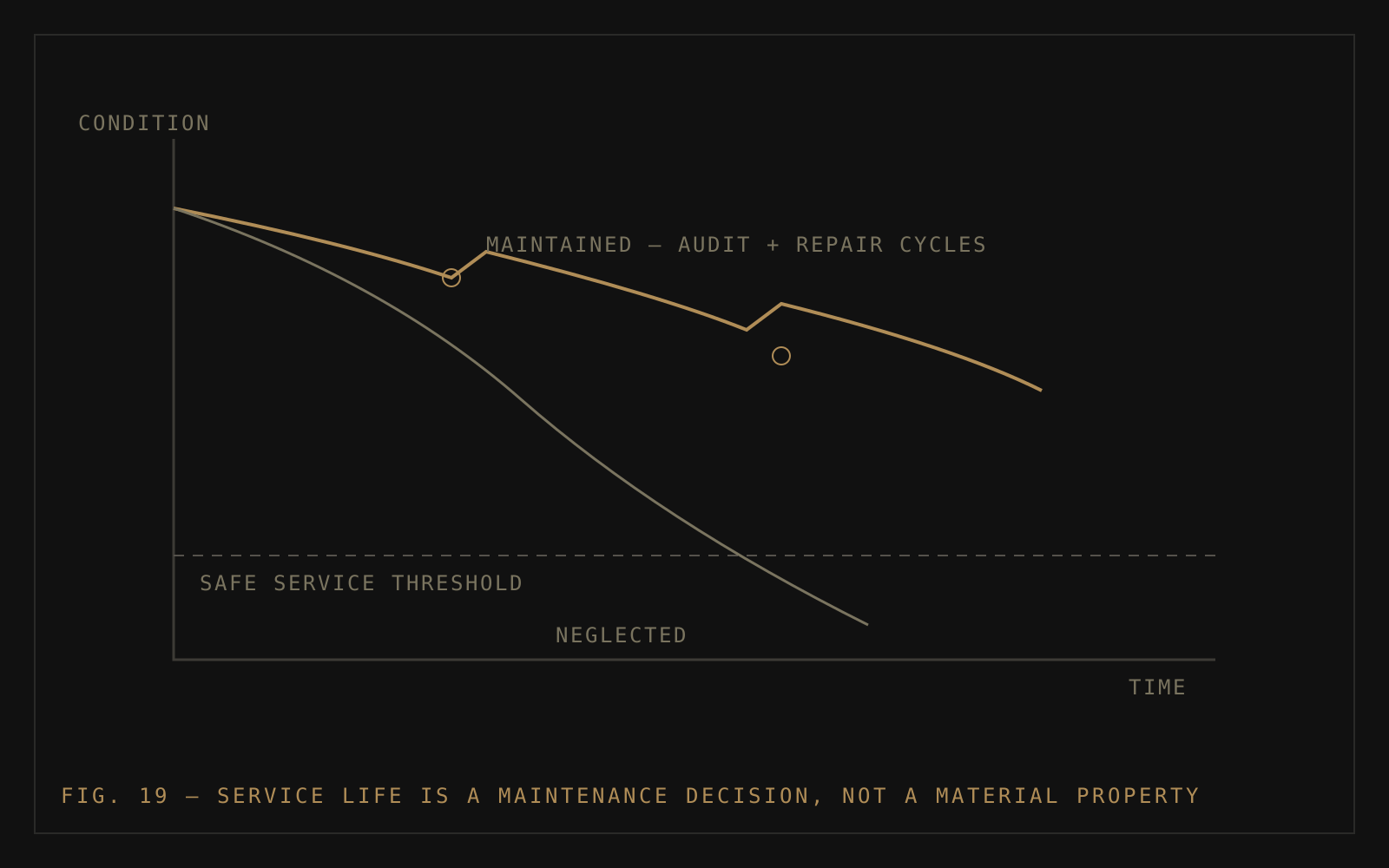
Fig. 19 shows the honest picture. A neglected building declines on an accelerating curve — slow invisible chemistry at first, then the corrosion-spalling cycle compounding, each year's damage financing the next. A maintained building saw-tooths: gradual decline, then a repair cycle that restores condition, repeated. The area between those curves is not just safety — it is money. Deterioration caught at the waterproofing stage costs a fraction of the same deterioration addressed at the structural repair stage, which itself costs a fraction of what distress-driven emergency work costs. The cheapest year to intervene is always the earliest one, and the mechanism for knowing where you are on the curve is the periodic structural audit.
When is a building actually 'finished'?
There is a genuine end-state: when deterioration is so widespread that repair approaches the cost and disruption of rebuilding, repair stops being the rational choice — the territory of repair-versus-redevelopment decisions. But that judgment must be made on evidence: measured section loss, tested concrete quality, the true extent of distress mapped member by member — not on age alone. Some of the soundest buildings an auditor sees are past their nominal design life; some of the most distressed are barely twenty. The audit exists precisely so that this decision — the largest financial decision most societies ever face — is made on the building's actual condition rather than its birth certificate.
The practical takeaway inverts the usual question. Instead of asking how long the building will last, ask: what is its measured condition today, what mechanisms are active, and what does this decade's maintenance need to be so that the next decade's report reads like this one? Buildings that are asked that question regularly tend to keep answering it well.