Published 2026-07-17Updated 2026-07-1710 min read
The previous chapter on structural audits ended with a test: after reading the report, can you answer what is wrong, why, how urgent it is, what it will cost, and what to do first? This chapter is about extracting those answers — because an audit report is written by an engineer but acted on by a committee, and the handover between those two readers is where repair projects go right or wrong.
Scope and methodology: read this first
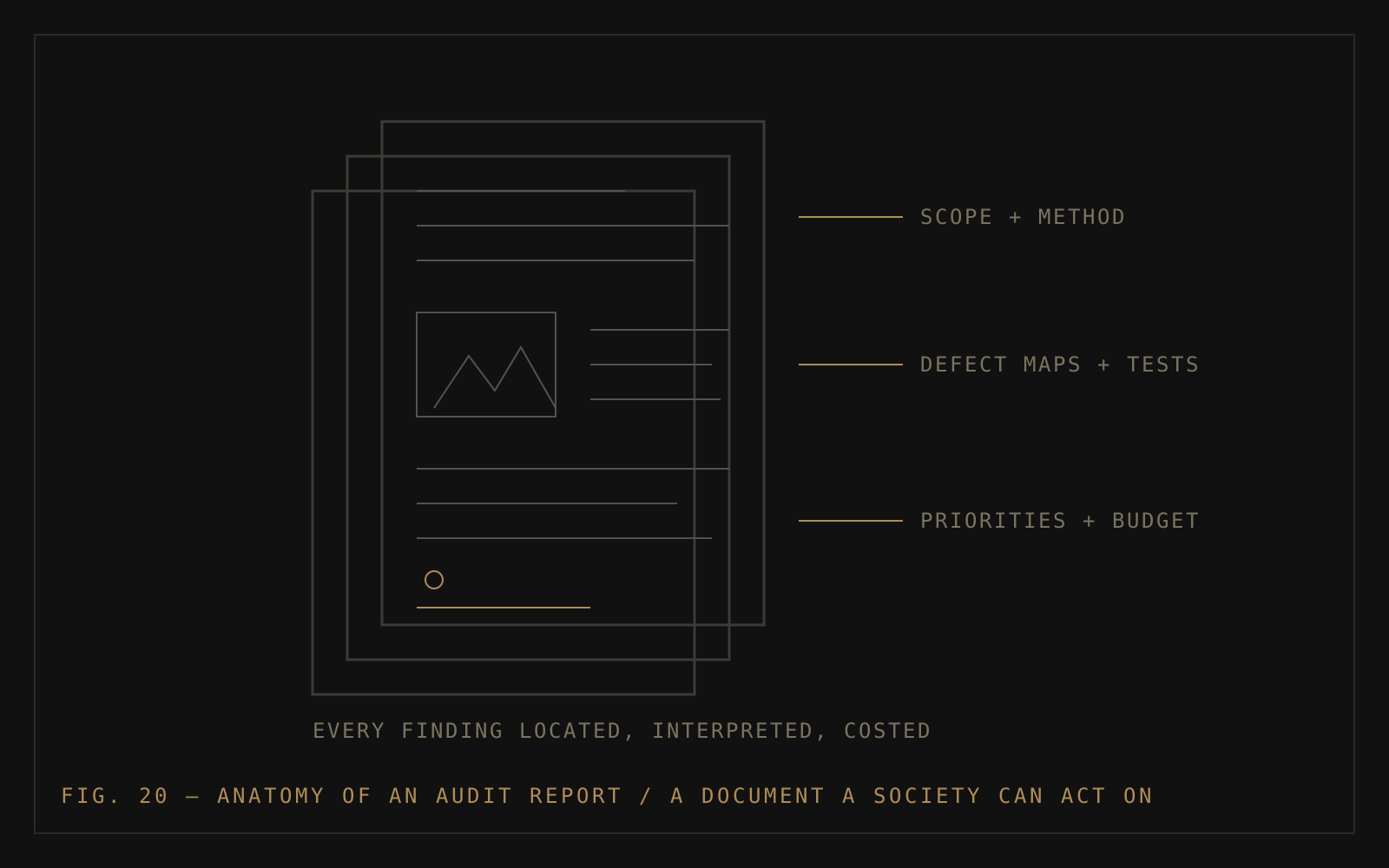
The least glamorous section governs everything after it. Scope states what was examined — which buildings, which members, whether finishes were opened, whether terraces and tanks were included. Methodology states how — visual survey standards, which NDT tests were performed, where and in what numbers. Read it to learn what the report cannot tell you: if no half-cell survey was done, the report is not evidence about active corrosion; if upper façades were assessed from ground level with binoculars rather than access or drone survey, findings there are impressions, not inspection. A report's silence is only meaningful where its scope actually looked.
The defect schedule: the building's case file
The core of the report is the documented defect record — each observation located (building, floor, member, face), described, photographed and classified. Two reading habits make this section useful rather than overwhelming. First, read for pattern, not count: two hundred fine shrinkage cracks matter less than fifteen spalls concentrated in the stilt-level columns, and the report's job — via defect maps — is to make such clustering visible. Second, connect defects to mechanisms: a good report does not just list 'spalling at beam B-12' but names the process behind it, in the language of carbonation, chlorides and corrosion. Defects are symptoms; the repair will be aimed at mechanisms.
Test results: numbers are not findings
Committees are often handed pages of UPV velocities, rebound indices and potentials. The numbers are raw material; what you are owed is interpretation. For each test cluster, the report should say what question the test asked, what the readings indicate, and what that means for repair. The decisive comparisons are usually simple: carbonation depth against measured cover (how much protective margin remains), half-cell potentials mapped into zones (where corrosion is active now), UPV ranges by member (where hidden poor concrete lies). If the report presents readings without conclusions, the analysis you paid for has not been done.
A committee is never required to understand every reading — but it is entitled to a plain-language interpretation of every test. 'What did this test tell you about our building?' is a question the auditor must be able to answer for each one.
Priorities: the section that becomes money
Recommendations should arrive classified — typically by urgency, from immediate safety items through structurally necessary repairs to preventive and cosmetic work. Read this section with three checks. Are priorities justified by findings, so you can trace each urgent item back to its evidence? Are specifications real — materials and methods stated well enough to tender against, not 'repair as required'? Does the cost estimate follow the same structure, so a phased budget can fund the urgent tier now without losing the rest? This classification, converted into a bill of quantities, is what goes to tender — the subject of the next chapter.
Red flags: recognising a weak report
- Generic content — paragraphs that could describe any building, photographs without locations, findings without member references
- No tests, or tests without interpretation — a visual walk-through priced as an audit
- No mechanisms named — defects listed but never explained, which makes cause-targeted repair impossible
- No priorities or costs — a report you cannot budget from is a report you cannot act on
- A repair contractor's audit — the diagnosing party pricing its own prescription is a conflict the tender stage cannot cure
- Impossible speed — a same-day report on a large building announces its own thoroughness
The meeting that completes the audit
A proper audit ends with the auditor presenting findings to the committee — walking through defect maps, translating test results, defending priorities and answering questions until the committee can explain the building's condition in its own words. Insist on it, minute it, and circulate the summary to members: the general body that will vote repair funds deserves the same understanding the committee received. A report understood by five people and filed is a diagnosis; a report understood by the society is the start of a repair project done in the right order.