Published 2026-07-17Updated 2026-07-179 min read
Societies routinely spend weeks comparing repair contractors and one meeting choosing the auditor — exactly backwards, given that the audit defines what the contractors will bid on. The difficulty is real: audit proposals arrive as similar-sounding documents with very different prices, and the cheapest usually looks indistinguishable from the best on paper. The method below replaces impression with verification, in four steps.
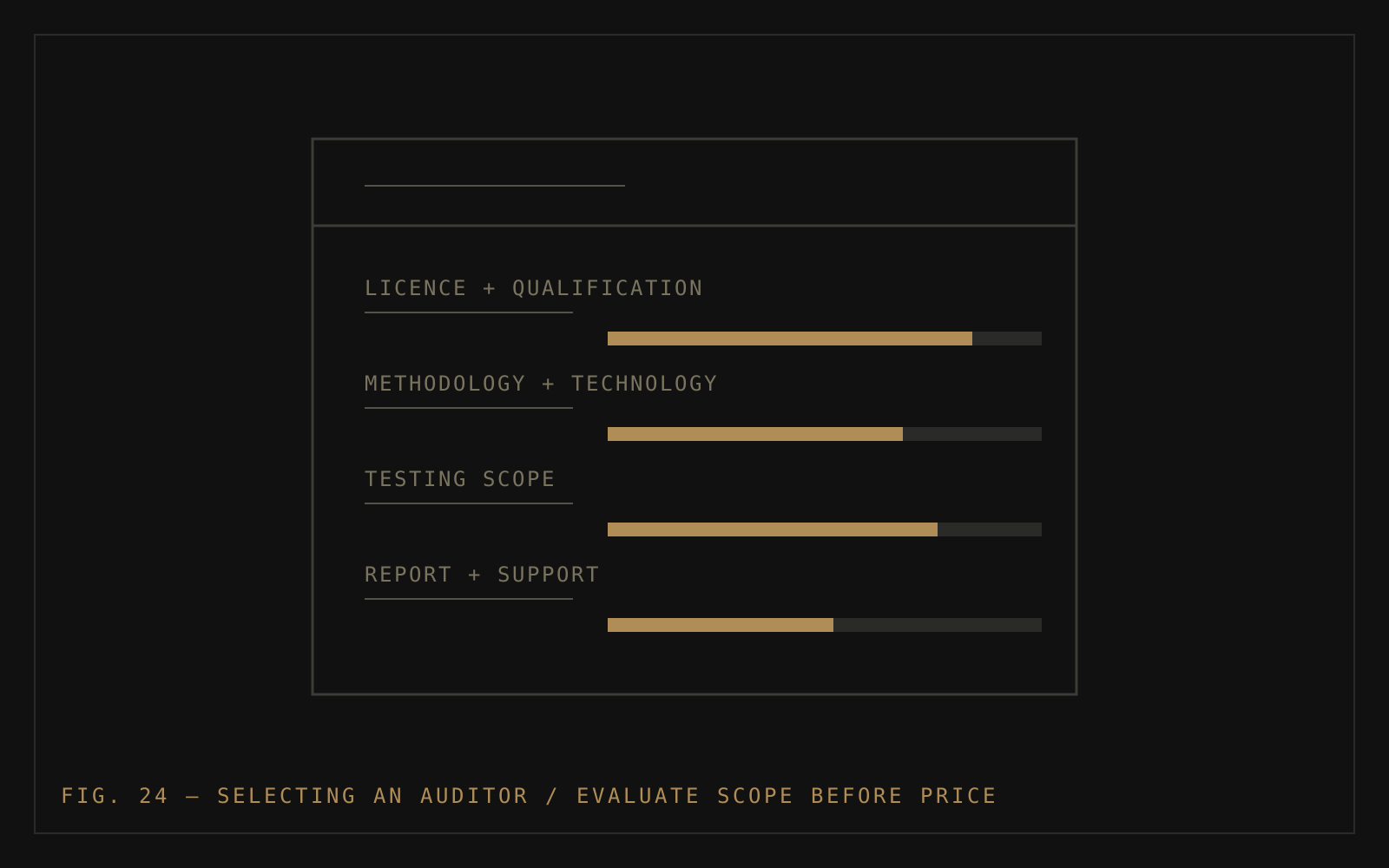
Step one: verify the licence to practise
- Qualification as a structural engineer — not merely a civil engineering degree; structural assessment is a specialisation
- Registration or empanelment with the relevant municipal authority, current and verifiable — required for mandatory audits and a baseline filter for any audit
- Professional standing: years in structural assessment specifically, and reference audits of comparable buildings
- Adequate professional capacity — who will actually do the work: the principal whose name is on the proposal, or an unnamed site team?
Verification means checking, not reading: confirm the registration against the authority's current list, and speak to at least one reference society about their experience — specifically whether the report proved usable when repairs were tendered, the test described in how to read an audit report.
Step two: compare scope, because price comparisons are scope comparisons in disguise
When two audit quotes differ by a large factor, they are almost never prices for the same work. The comparison that matters is line by line against the anatomy of a proper audit: Is the visual survey full-coverage or sampling? Which NDT tests are included, at what quantities, and are they selected against the building's likely mechanisms — half-cell and cover surveys for a coastal corrosion profile, UPV where concrete quality is in doubt? Is upper-façade access solved properly (drone survey) or waved away? Does the deliverable include defect maps, interpreted results, priorities, specifications and a costed estimate — or 'a detailed report'? A committee that tabulates three proposals this way usually finds the price gap explains itself: the cheap proposal is a walk-through with a rebound hammer, priced accurately.
Ask each bidder the same question: 'Show us a sample report for a comparable building, with the society's details redacted.' Nothing distinguishes auditors faster — the sample shows exactly what your money buys, before you spend it.
Step three: the independence test
The auditor's only product is an opinion, so the opinion must have nothing to sell. An auditor who also seeks the repair contract — or is introduced by, affiliated with, or compensated by a repair contractor — holds a direct interest in what the audit finds; the diagnosis funds the prescription. The clean structure is separation: the auditor assesses; repair is tendered competitively against the audit's findings under a defined process; supervision answers to the society. Independence is also the society's protection in the other direction — an independent auditor has no incentive to understate problems to keep a repair bid attractive.
Step four: contract the deliverables, not the visit
The appointment should state in writing: the scope (buildings, members, access method for each zone), the test schedule with quantities, the report contents item by item (through to priorities, specifications and cost estimate), the presentation meeting to the committee, timelines, and the fee against those deliverables. This converts the proposal's promises into obligations — and it gives the committee an objective completion test: the audit is done when the contracted deliverables exist, not when a PDF arrives.
Red flags, collected
- Registration that cannot be verified, or reluctance to quote it
- A fee dramatically below others, unexplained by a narrower written scope — the scope is narrower; it is simply not written
- No testing in the proposal, or 'testing if required' without saying who decides and at what cost
- Refusal to share a redacted sample report
- Any connection to a repair contractor, disclosed or discovered
- Same-day or near-instant delivery promises for a large building
- A proposal that never mentions your building specifically — audit-by-template announces report-by-template
The pattern across all four steps is the same one that runs through this whole section of the library: the society's protection is never trust — it is verification against predefined criteria. Choose the auditor the way the audit will later choose the repairs: on evidence, in writing, before money moves.