Published 2026-07-17Updated 2026-07-179 min read
Definition — Settlement
Settlement is the downward movement of a structure as the ground beneath its foundations compresses or yields under load. Some settlement is normal and designed for; the damaging form is differential settlement, where parts of the building settle by different amounts and the structure is forced to distort.
The load path ends where engineering meets geology: the foundation's job is to spread each column's concentrated load until the soil can carry it. Soil, though, is not rock — it compresses under load, swells and shrinks with moisture, and varies from one corner of a plot to another. Every building settles a little as the ground adjusts to its weight. Designed correctly, that settlement is small, slow and — critically — uniform.
Uniform versus differential: the distinction that decides everything
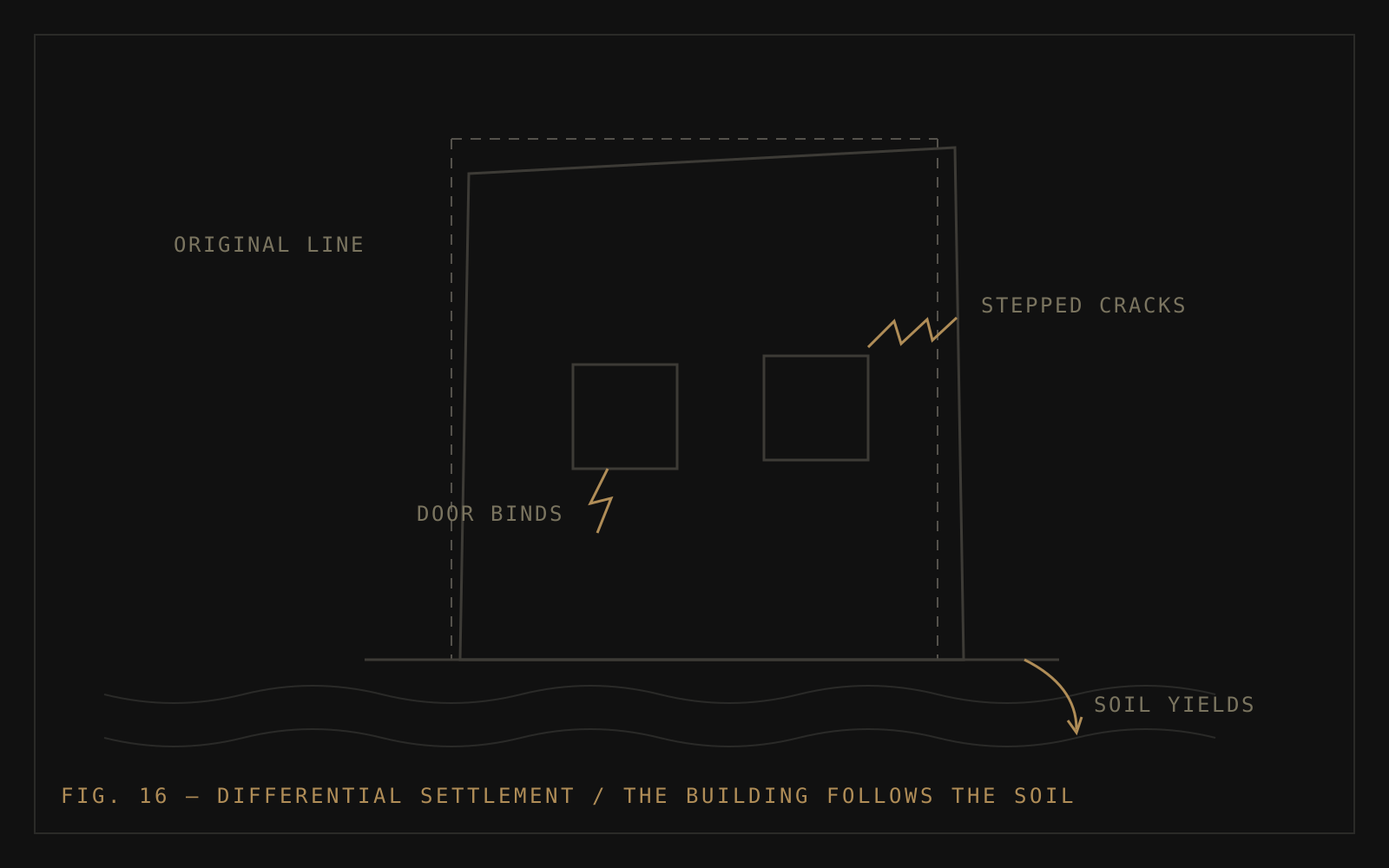
If an entire building settles evenly by a small amount, almost nothing happens: the structure rides down as one rigid body, unstressed. The damage begins when settlement is uneven — one column, one corner, one wing settling more than the rest. Now the structure is being bent by its own supports. Frames are forced into distortions they were never designed for, masonry — which tolerates almost no stretching — cracks in the characteristic stepped diagonal patterns from the cracks chapter, and door and window frames rack out of square. That last effect explains the classic early symptom: a door that fitted for twenty years and now scrapes or refuses to latch. The door has not changed shape. Its frame has.
Why ground moves
- Compression under load — soils, especially clays, consolidate slowly for years as water is squeezed from their pores
- Moisture cycles — expansive clay soils, common across parts of India, swell in the monsoon and shrink in the dry season, moving foundations with them
- Water action — leaking drains and water lines softening soil, or groundwater changes altering its strength
- Adjacent activity — excavation for a neighbouring basement or infrastructure removing lateral support from under existing foundations
- Trees — large trees near shallow foundations drawing moisture from clay and shrinking it, particularly in dry years
- Inadequate original design — foundations sized for assumed soil conditions that the actual ground never matched
Notice how many of these involve water. The same agent that drives carbonation and corrosion above ground governs soil behaviour below it — one more reason plumbing leaks and blocked drains are structural issues, not merely maintenance ones.
The symptom checklist
- Doors and windows that begin sticking, scraping or refusing to latch — especially several, on the same side of the building
- Stepped diagonal cracks in walls, typically radiating from the corners of openings
- Cracks that are wider at the top than the bottom (or vice versa) — recording rotation, not just separation
- Floors that slope perceptibly, or a marble that rolls consistently to one corner
- Gaps opening between skirting and floor, or between walls and ceilings
- Externally: a plinth line that no longer reads level against a reference
One symptom alone proves little — timber swells, frames rack for other reasons, plaster cracks freely. What tells the settlement story is correlation: several symptoms, clustered on one side or corner, appearing or worsening together. That geometry points at the part of the foundation that is moving.
How engineers investigate
Foundation investigation works from symptom back to cause. The crack pattern is mapped across the whole building — settlement cracking has a geometry that distinguishes it from corrosion or shrinkage cracking, which is one reason the structural audit documents every crack rather than sampling a few. Level surveys measure how far floors and plinth lines have actually moved from horizontal, converting impressions into millimetres. Movement is then monitored over time — tell-tales across representative cracks, repeated level readings — because the single most important question is whether settlement is historic and stable or active and progressing. Where cause remains unclear, investigation extends to the ground itself: trial pits beside foundations and soil testing, and a hard look at the drainage and plumbing around the affected zone.
The distinction between stable and active drives everything that follows. Old, stabilised settlement may need nothing more than crack repair and monitoring. Active settlement needs its cause addressed — a leak fixed, drainage corrected, or in serious cases the foundation itself strengthened or underpinned, work that is always designed from investigation, never improvised.