Technology
Digital Twin
A digital twin is the measurable digital counterpart of a real building — built from drone imagery and photogrammetry, used by engineers to measure, map and compare what the building itself cannot show from the ground.
Overview
What it is.
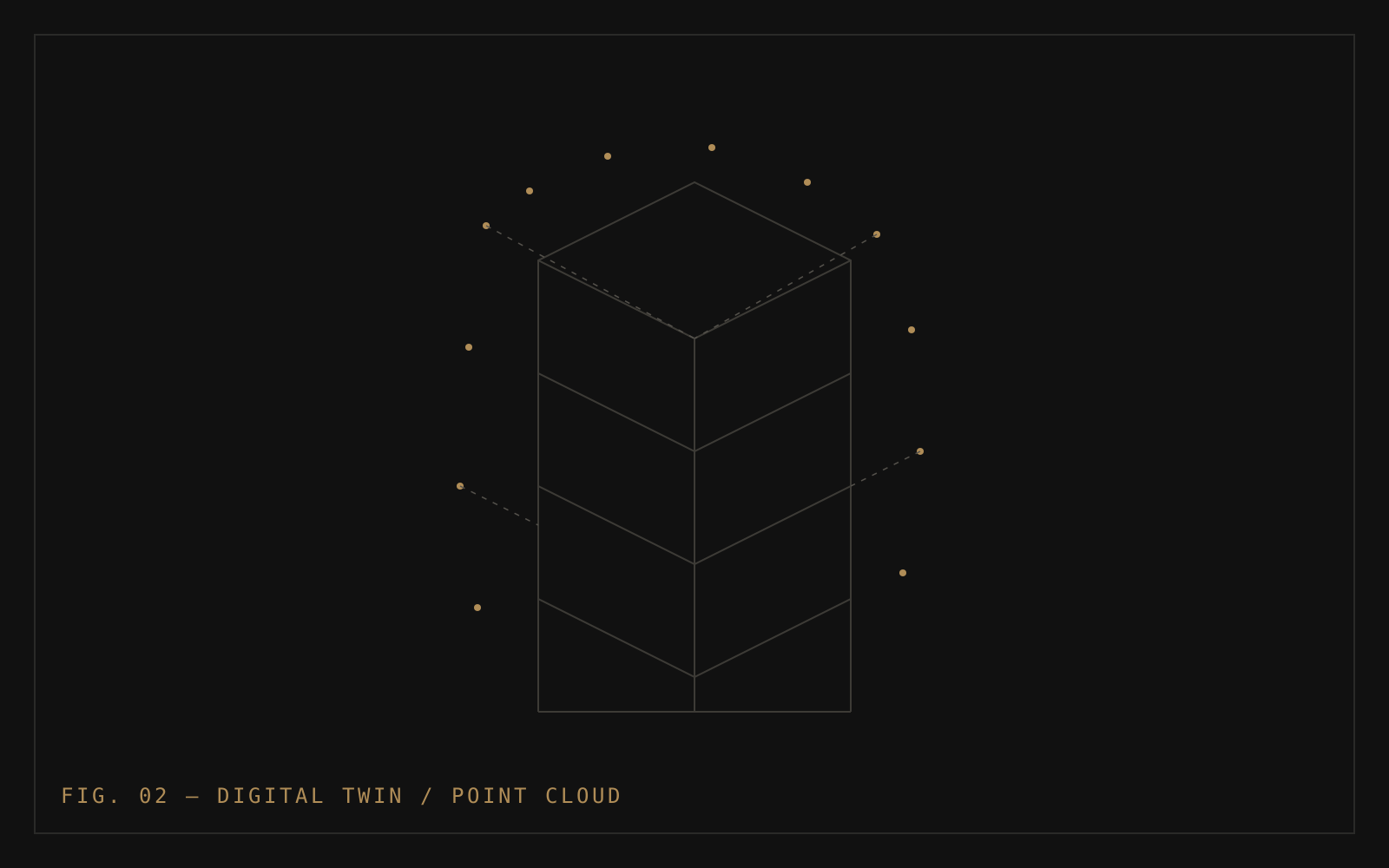
A digital twin, in repair engineering, is a verified 3D model of an existing building on which engineers work as if standing on every square metre of the façade at once: measuring areas, tracing cracks, marking defects and extracting quantities.
The twin is where our field technologies converge — drone imagery gives it eyes, photogrammetry gives it geometry, and the structural audit gives it engineering meaning. Once built, it becomes the single reference for the whole repair project: audit, tender, execution and completion all measure against the same model.
Why It Exists
The problem it solves.
Repair projects run on quantities, and quantities have historically run on estimation. Disagreements about how many square metres of plaster or metres of crack repair were priced — and later, executed — are the root of most repair project disputes.
A digital twin replaces the argument with a measurement. The same model that quantified the tender verifies the bills; the model captured before repairs becomes the baseline every future audit compares against.
How It Works
The process, step by step.
01
Capture
A drone survey photographs the complete envelope in systematic overlapping passes — the raw material of the twin.
02
Reconstruction
Photogrammetric processing converts the photographs into a dense point cloud and textured 3D mesh, scaled and verified against reference measurements taken on site.
03
Engineering annotation
Engineers map defects directly onto the model — every crack, spall and stain located and measured in its true position — and extract façade areas and repair quantities.
04
Project integration
Measured quantities feed the BOQ; annotated elevations join the audit report; and the model is archived as the project's permanent baseline for progress comparison and future audits.
Advantages
Where it excels.
- One verified reference shared by audit, tender and execution
- Centimetre-level façade measurement without physical access
- Defects mapped in true position, not sketched approximately
- Objective before-and-after comparison across the project
- A permanent baseline for future deterioration monitoring
Limitations
Where it doesn't.
- Quality is inherited from capture — a poor survey produces a poor twin
- External envelope focus; interiors need separate capture
- The model records geometry and appearance, not hidden conditions — thermography and NDT answer those questions
Every technology has limits. Knowing them is part of using it well — and part of why engineering judgement stays in charge.
Where We Use It
The services it powers.
- Digital Twin (service)Commission a twin for your building
- Structural AuditThe twin documents what the audit interprets
- Project Management ConsultancyExecution measured against the baseline model
From the Knowledge Centre
Frequently Asked Questions
Common questions, straight answers.
What is the difference between a digital twin and a 3D model?
Scale and verification. Any 3D model can look like the building; a digital twin is scaled against reference measurements and verified against known dimensions, so engineering measurements taken from it are defensible. It also stays connected to the project — quantities, defects and progress all reference it.
How long does a digital twin stay useful?
Indefinitely, as a record of the building at the moment of capture. Its value grows over time: a future survey can be compared against it to quantify exactly how the building has changed — which no memory or photograph archive can do.
Is a digital twin worth it for a small building?
It depends on the decision the building faces. Where repair quantities are significant or disputed, or access is difficult, the twin typically pays for itself in tender accuracy alone. For small, simple structures, conventional measurement may be adequate — we advise per building, not per fashion.
Related Technology
The rest of the platform.
Next Step
Discuss your building with our engineers.
Whether your society is planning a structural audit, preparing a tender or beginning a repair project, the right first step is an engineering conversation — not a sales call.