Technology
Thermography
Thermography reads the temperature of every surface on a building. Because hidden moisture, voids and debonded finishes change how surfaces hold heat, an infrared camera reveals what visual inspection cannot.
Overview
What it is.
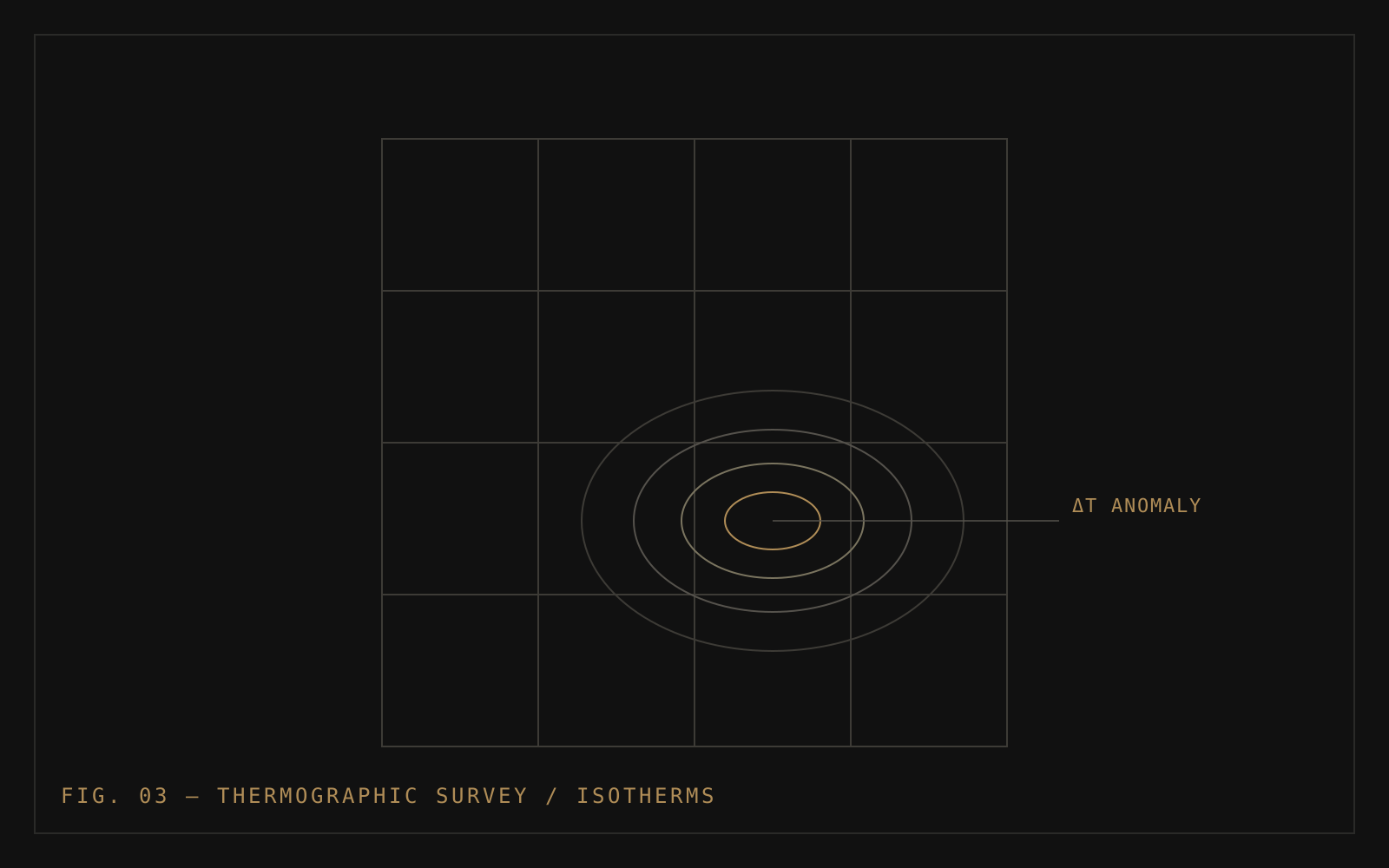
An infrared camera does not photograph light — it measures the thermal radiation every surface emits, converting it into an image where temperature differences become visible patterns. On buildings, those patterns carry diagnostic information: damp concrete cools differently from dry, debonded plaster heats differently from bonded, and a leakage path traces a thermal signature across a façade.
The instrument sees temperature; the engineer reads meaning. Thermography's value comes entirely from interpretation — which is why every anomaly we report is correlated with physical observation before it becomes a finding.
Why It Exists
The problem it solves.
The costliest building defects are invisible ones. Water travels inside walls and slabs long before it stains a ceiling, and plaster separates silently from its substrate before it falls. Visual inspection, by definition, cannot see any of it.
Thermography exists because subsurface conditions leave a surface-temperature fingerprint. Reading that fingerprint across a whole building turns hidden deterioration into mapped, investigable anomalies.
How It Works
The process, step by step.
01
Survey timing
Thermal contrast is everything. Surveys are scheduled around solar exposure, recent rainfall and surface conditions — the same façade can reveal a defect at one hour and hide it at another.
02
Full-envelope capture
Drone-mounted infrared covers façades and roofs; handheld imaging covers interiors, terraces and shafts. Complete coverage means anomalies are found where nobody thought to look.
03
Anomaly analysis
Thermograms are reviewed for patterns consistent with moisture, leakage and debonding, and each anomaly is located on the building's elevations — on the digital twin where one exists.
04
Correlation and interpretation
Significant anomalies are checked against visual observation and moisture measurement. Only corroborated findings become conclusions; the rest are reported as areas for further investigation.
Advantages
Where it excels.
- Detects moisture, leakage paths and debonding while still invisible
- Screens entire façades in a fraction of the time physical methods need
- Completely non-destructive — no breaking, no disruption
- Directs repairs at sources instead of symptoms
Limitations
Where it doesn't.
- Measures surface temperature only — subsurface conditions are inferred, not seen
- Highly condition-dependent; wrongly timed surveys can mislead
- Anomalies need physical corroboration before they are conclusions
- Cannot quantify moisture content — meters and testing do that
Every technology has limits. Knowing them is part of using it well — and part of why engineering judgement stays in charge.
Where We Use It
The services it powers.
- Full Building ThermographyThe complete survey as a service
- Structural AuditThermal findings inside the audit
- Drone SurveyThe aircraft that carries the thermal camera
From the Knowledge Centre
Frequently Asked Questions
Common questions, straight answers.
What does a thermal camera actually measure?
Infrared radiation emitted by surfaces, which it converts to apparent surface temperature. It does not see through walls — it reads the temperature pattern on the surface, from which trained interpreters infer subsurface conditions like trapped moisture or voids.
Why does survey timing matter so much?
Because anomalies only appear when there is thermal contrast. A damp patch shows when the wall around it is warming or cooling at a different rate — typically after sunrise or sunset transitions. Survey the same wall at thermal equilibrium and the defect is invisible.
Can thermography find the source of a leak?
It frequently traces the path between entry point and visible symptom, which is exactly what waterproofing repairs need. Complex cases still require correlation with moisture metering or targeted opening — but directed by evidence rather than trial and error.
Related Technology
The rest of the platform.
Next Step
Discuss your building with our engineers.
Whether your society is planning a structural audit, preparing a tender or beginning a repair project, the right first step is an engineering conversation — not a sales call.